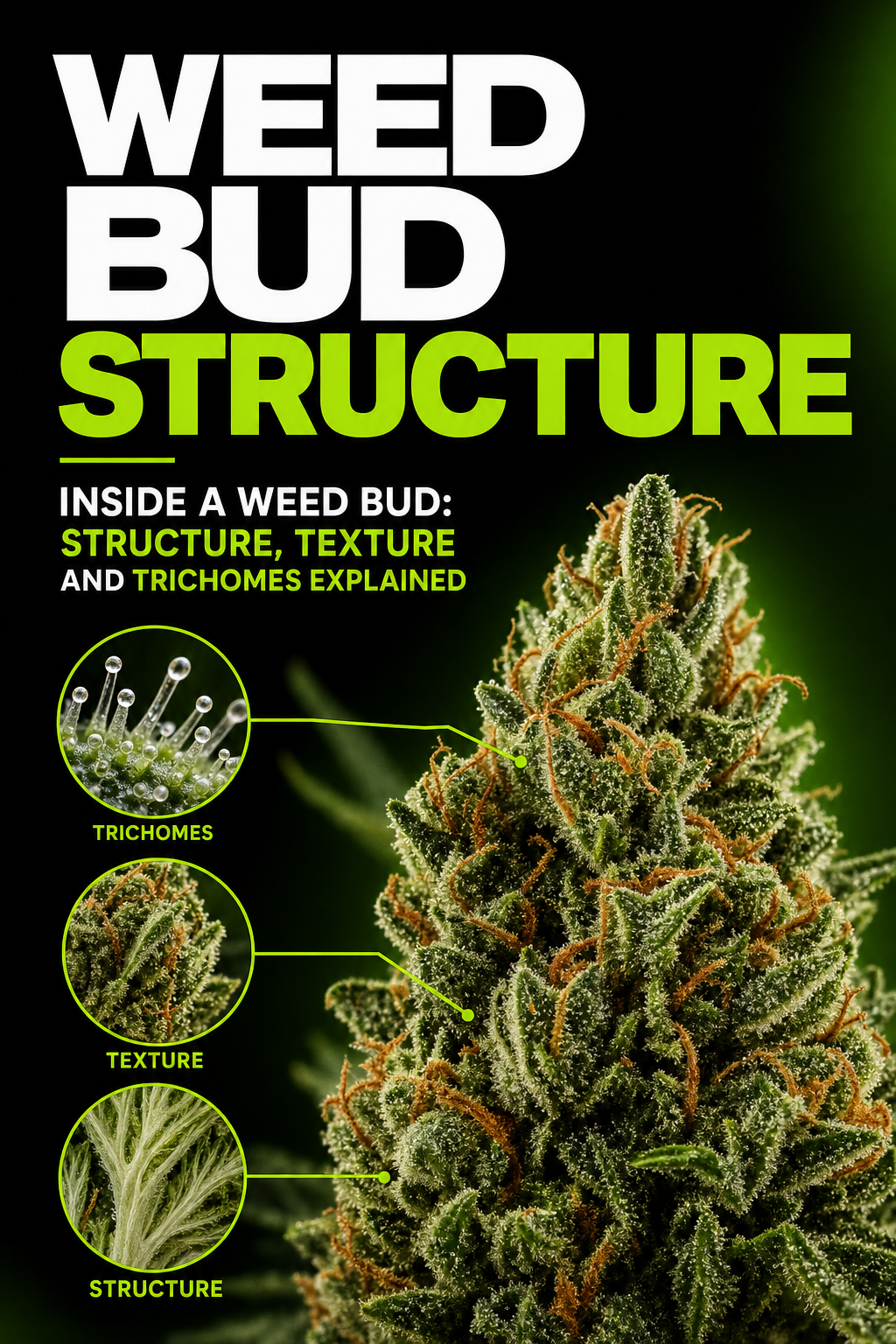
Exploring the intricate details of a weed bud can enhance your appreciation for this fascinating plant. Understanding the weed bud structure, including its texture and trichomes, offers insights into its potency and quality. Whether you’re a seasoned enthusiast or a curious newcomer, this guide will unravel the mysteries of cannabis bud anatomy.
Understanding the Weed Bud Structure
The weed bud, or cannabis flower, is a complex structure that plays a crucial role in the plant’s lifecycle. It is the part of the cannabis plant that is harvested, dried, and consumed. The bud’s structure is not only vital for reproduction but also for the production of cannabinoids and terpenes, which contribute to the plant’s effects and aroma.
Key Components of Cannabis Bud Anatomy
- Calyx: The calyx is the first layer of the bud, protecting the reproductive organs. It is covered in tiny, hair-like structures called trichomes, which produce the plant’s cannabinoids and terpenes.
- Pistils: These are the hair-like structures that emerge from the calyx. Pistils start as white and turn to orange or brown as the plant matures. They play a role in reproduction by capturing pollen.
- Trichomes: These are the resin glands of the cannabis plant. Trichomes on weed are responsible for the production of THC, CBD, and other cannabinoids. They also produce terpenes, contributing to the plant’s aroma and flavor.
The Role of Trichomes in Weed Buds
Trichomes are perhaps the most critical component of the weed bud structure. These tiny, crystal-like glands cover the surface of the cannabis flower. They serve as a defense mechanism against pests and environmental stressors, but for humans, they are the source of the plant’s psychoactive and therapeutic properties.
Types of Trichomes
- Capitate-Stalked Trichomes: These are the largest and most abundant trichomes found on cannabis buds. They have a stalk and a head, where the majority of cannabinoids and terpenes are produced.
- Capitate-Sessile Trichomes: Smaller than their stalked counterparts, these trichomes are also found on the cannabis flower but are less abundant.
- Bulbous Trichomes: The smallest of the trichomes, they are scattered across the plant and contribute minimally to cannabinoid production.
Exploring Marijuana Bud Texture
The texture of a marijuana bud is a key indicator of its quality. A well-cured bud should be slightly sticky to the touch, indicating a healthy presence of trichomes. However, it should not be too dry or too moist. Properly cured cannabis will have a firm structure, with some give when squeezed gently.
Factors Affecting Bud Texture
- Curing Process: Proper curing enhances the texture and potency of the cannabis bud. It involves drying the buds slowly to preserve their cannabinoids and terpenes.
- Moisture Content: Buds that are too dry may crumble easily, while overly moist buds can be susceptible to mold.
- Handling and Storage: Rough handling or improper storage can damage the trichomes, affecting the bud’s texture and potency.
Weed Plant Structure and Its Importance
Understanding the weed plant structure is essential for growers and consumers alike. The plant’s anatomy influences its growth, yield, and cannabinoid production. The main components include the roots, stems, leaves, and flowers, each playing a vital role in the plant’s development.
Key Parts of the Weed Plant
- Roots: These anchor the plant and absorb water and nutrients from the soil.
- Stems: They support the plant and transport nutrients and water throughout.
- Leaves: Responsible for photosynthesis, they convert sunlight into energy for the plant.
- Flowers (Buds): The reproductive part of the plant, rich in cannabinoids and terpenes.
Cannabis Flower Details: What to Look For
When examining cannabis flowers, several details can indicate quality and potency. A high-quality bud will have a vibrant color, a strong aroma, and a dense structure. The presence of abundant trichomes is a good sign of a potent product.
Tips for Evaluating Cannabis Flowers
- Color: Healthy buds often have a rich green color with hints of purple, orange, or red.
- Aroma: A strong, pleasant aroma indicates a high terpene content.
- Density: Dense buds are usually more potent than airy ones.
- Trichome Coverage: A frosty appearance signifies a high concentration of trichomes.
Conclusion
Understanding the intricate details of weed bud structure enhances your appreciation and selection of cannabis products. Whether you’re exploring the diverse offerings at Herb Club Pattaya or simply expanding your knowledge, recognizing the significance of trichomes, texture, and overall plant structure is invaluable. For more insights and quality cannabis experiences, visit Herb Club Pattaya in Central Pattaya, where you can discover a wide range of cannabis products tailored to your needs. Always remember, regulations may change, so stay informed about local guidelines.
Visit Herb Club Pattaya – Weed Shop Pattaya for location, opening hours, visitor information and current requirements.
Related article: Cannabis Aroma Vocabulary: 20 Useful Terms for Beginners
Explore Herb Club Pattaya
Explore our space, location, directions and visitor information.